You don’t need a history book to learn something about Vietnam’s past. You’ll do just fine with a city map that encourages you to read the street signs.

City by city, district to district, Vietnamese street names are very much the same. They change with the government, of course. The current communist administration will never honor traitors to its cause, and many names used in the eras of French colonialism and South Vietnamese republicanism — those not commemorating ancient history — have been erased and replaced.
Many 20th-century martyrs and revolutionary leaders are now exalted on urban corners, along with historical figures who lived more than two millennia in the past. Places and events important to the regime in Hanoi are represented, as well.
What follows is a list of more than two dozen names that repeatedly appear throughout Vietnam, from Ho Chi Minh City to Haiphong, Nha Trang to Can Tho. The list by no means exhaustive. But it might perhaps be considered a starting point for further diving into the rich history of this Asian nation.

Bạch Đằng
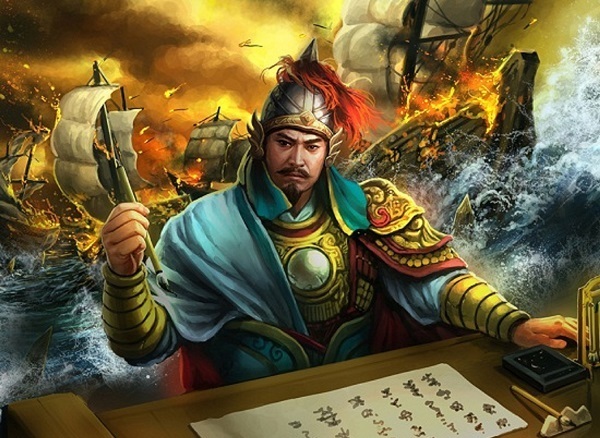
A short but strategic river in northern Vietnam (near Ha Long Bay), famed as the site of three historical battles between the 10th and 13th centuries. Sharpened poles were hidden in the river to impale foreign naval ships and successfully drive away Chinese and Mongol invaders.
Bà Tháng Hai
The Third of February (3/2) is important to Vietnam for two reasons: In 1930, it was the day the Communist Party of Vietnam was founded in Hong Kong. Hô Chí Minh, then known as Nguyen Ai Quoc, was among the founding fathers. And on February 3, 1994, U.S. President Bill Clinton announced the lifting of the American embargo on Vietnam, a first step in reestablishing relations between the countries. Clinton is still highly esteemed by Vietnamese.
Cách Mạng Tháng Tám
The “August Revolution,” as it’s known in English, was launched in late August 1945 by the Hô Chí Minh-led Viet Minh armies against the empires of French Vietnam and Japan. Although the Việt Minh was supported by the Indochinese Communist Party, the movement was designed to appeal to a wider population than purely Marxist-Leninist ideals could command.

Điện Biên Phủ
Now a city of 150,000, Điện Biên Phủ’s name is synonymous with the 1954 siege and battle that put an end to the French colonization of Vietnam. After World War II, when Japan occupied Indochina, France failed to regain control of its lucrative opium trade in Vietnam’s northwest. Việt Minh sympathizers, who were growing rice here, rebelled when France tried to take the land back. That set the stage for a 57-day siege of the garrison, March 13 to May 7, 1954. The consequent Viet Minh victory led to the Geneva accords, partitioning Vietnam into North and South.
Đinh Tiên Hoàng
The founding emperor of the short-lived Dinh dynasty, Hoàng (also known as Đinh Bộ Lĩnh, 924–979) defeated a dozen other warlords, declared independence from China’s Southern Han dynasty, and became the first emperor of a unified Vietnam in 968. He renamed the country Đại Cồ Việt.
Đồng Khởi
The name means “Uprise Together.” A Viet Minh-inspired movement active in 1959 and 1960, it urged farmers and other rural Vietnamese to revolt against the South Vietnamese government and its American advisors. That led to the disintegration of federal control in the Mekong Delta and parts of the Central Highlands, and to the establishment of the National Liberation Front.
Hai Bà Trưng
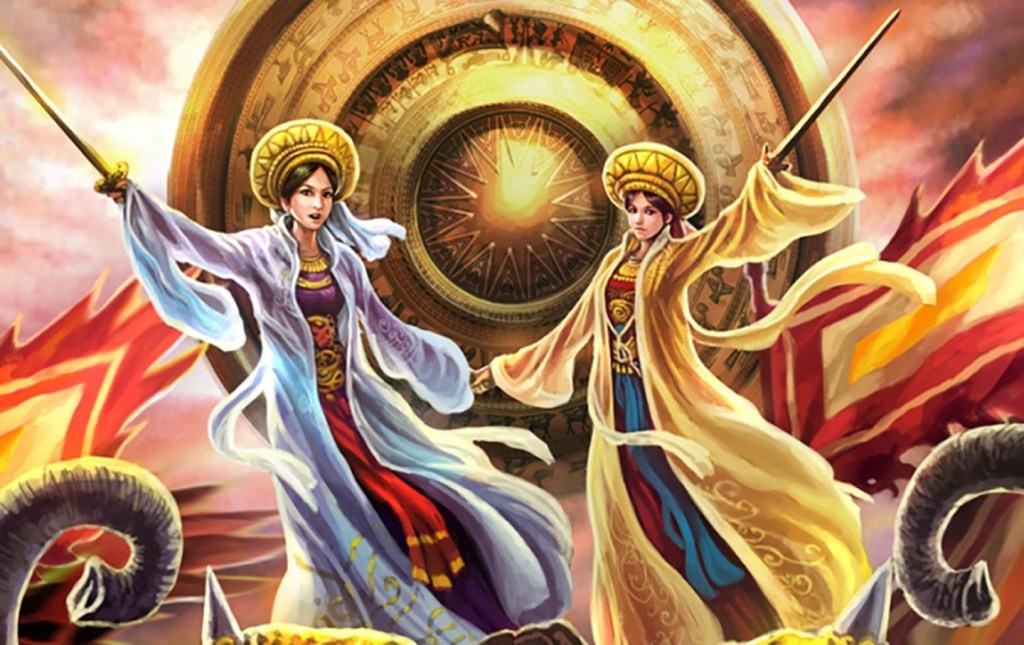
No women in Vietnamese history are more famous than the Trưng sisters, heroines who continue to capture the national imagination 2,000 years after they lived. Trưng Trắc, Vietnam’s first female ruler, and Trưng Nhị, her younger sister, rallied armies against the controlling forces of China’s Han dynasty and reigned for three years — until the Han emperor sent 20,000 troops after the young women, still in their late 20s. Rather than allow themselves to be captured, they threw themselves into the Sung River and drowned.
Hùng Vương
The “Hung Kings” were the legendary monarchs of the Lac Viet people of the Vietnamese-Chinese kingdom of Van Lang. They used magic to control the diverse tribes between 2879 and 258 B.C., also known as the Hồng Bàng era. Since the 15th century A.D., they have been regarded as national ancestors, with a national holiday honoring them in mid- to late April.
Lê Duẩn
Born Lê Văn Nhuận (1907-1986), he led Vietnam in the two decades following the decline and death of Hồ Chí Minh (in 1969). As general secretary of the Central Committee of the Communist Party, Lê Duẩn continued Hồ’s policy of ruling through collective leadership
Lê Lợi
Also known as Lê Thái Tổ (1384-1433), he became the first emperor of the restored kingdom of Đại Việt. From 1418 to 1427, he and his followers rose up against Ming dynasty rule, using guerrilla tactics in the Lam Sơn Uprising.
Lê Thánh Tông
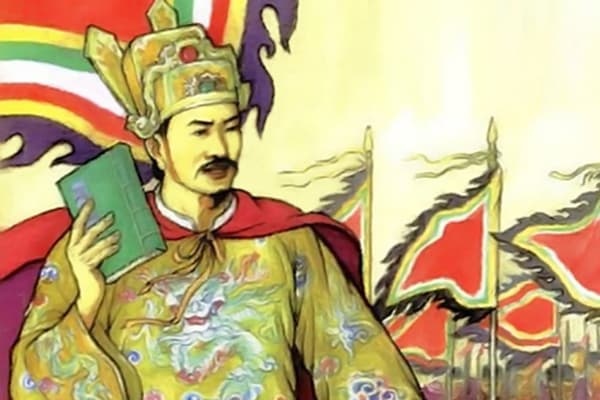
Considered one of Vietnam’s greatest emperors, Tông ruled Đại Việt from a 1460 coup d’état, when he was 18, to his death in 1497, the longest reign of the Later Lê dynasty. He is credited with many administrative, military, educational and fiscal reforms, conquests of Champa states in the south, and a cultural revolution that replaced the old aristocracy with a generation of scholars.
Lý Thái Tổ
The founding emperor of the Lý Dynasty, Tổ (974-1028), reigned from 1009 until his death in 1028. Although the dynasty lasted until 1225, he is best remembered for establishing his capital at modern Hanoi. (The city celebrated its 1000th birthday in 2010.) He named it Thang Long because, legend says, he dreamt of dragons flying as he entered the city.

Lý Thường Kiệt
Kiệt (1019–1105) was a Lý dynasty military leader who served three emperors. He invaded Champa (1069) and defeated the Song invasion of Vietnam in the late 11th century.
Lý Tự Trọng
A Vietnamese revolutionary executed by the French in 1931 when he was 17 years old: During a nationalist speech in Saigon, he had fired a gun at French secret police. His martyrdom was seen as symbolic of French brutality. On Lý Tự Trọng street in Ho Chi Minh City is the former USAID building, famous for the helicopter evacuation of U.S government employees during the Fall of Saigon in 1975.
Ngô Quyền
Quyền (898-944) first achieved widespread fame as an admiral in 938, when he defeated the Southern Han dynasty at the Battle of Bạch Đằng River (see above). The battle ended more than 1,000 years of Chinese rule over Vietnam dating back to 111 BC. He subsequently founded the Ngô dynasty and reigned until 944.
Nguyễn Bỉnh Khiêm
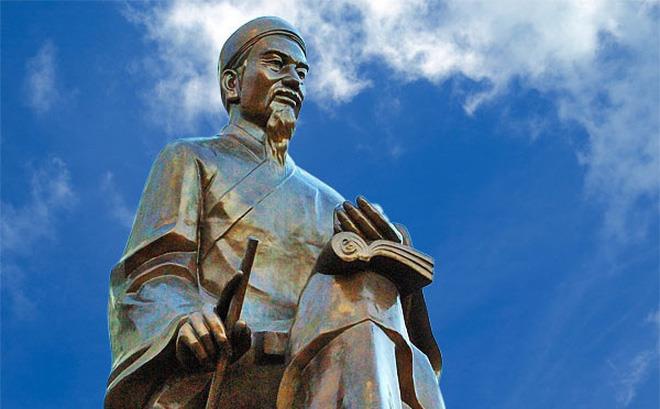
A Confucianist civil servant (1491-1585) whose sage advice to opposing political leaders led to a peaceful division of Vietnam that lasted for 200 years, Khiêm was thereafter seen as a Nostradamus-like prophet. He predicted the creation of the Vietnamese nation before the name Việt Nam had ever been coined. In the 20th century, he was posthumously embraced as an avatar of the Cao Dai religion and a saint of the new School of Teaching Goodness.
Nguyễn Đình Chiểu
A poet known for his nationalist and writings against the French colonization of Cochinchina (southern Vietnam). Chiểu (1822–1888) wrote the epic poem Lục Vân Tiên, one of the most celebrated works of Vietnamese literature.
Nguyễn Du
No other piece of Viet literature is as famous as The Tale of Kiều (Truyện Kiều), an epic poem of 3,254 verses written by Nguyễn Du (1765–1820). A story of lovers forced apart by the girl’s loyalty to family honor, it recounts the trials of Thúy Kiều, a beautiful young woman who sells herself into marriage with an older man to save her father and younger brother from prison. Sadly, her husband coerces her into a life of prostitution.

Nguyễn Huệ
Nguyễn Huệ (1753-92) and his two brothers were the leaders of the Tây Sơn rebellion. They overthrew the Later Lê dynasty, ended a war between the feudal houses of Nguyễn in the south and Trịnh in the north, repelled an attack by China’s Qing empire, and united Vietnam for the first time in 200 years. Installed as Emperor Quang Trung in 1788, Huệ planned to march south to destroy the remnant Nguyễn army. But he died young and his successors were defeated by Nguyễn Ánh, who established the Nguyễn dynasty in 1802.
Nguyễn Thị Minh Khai
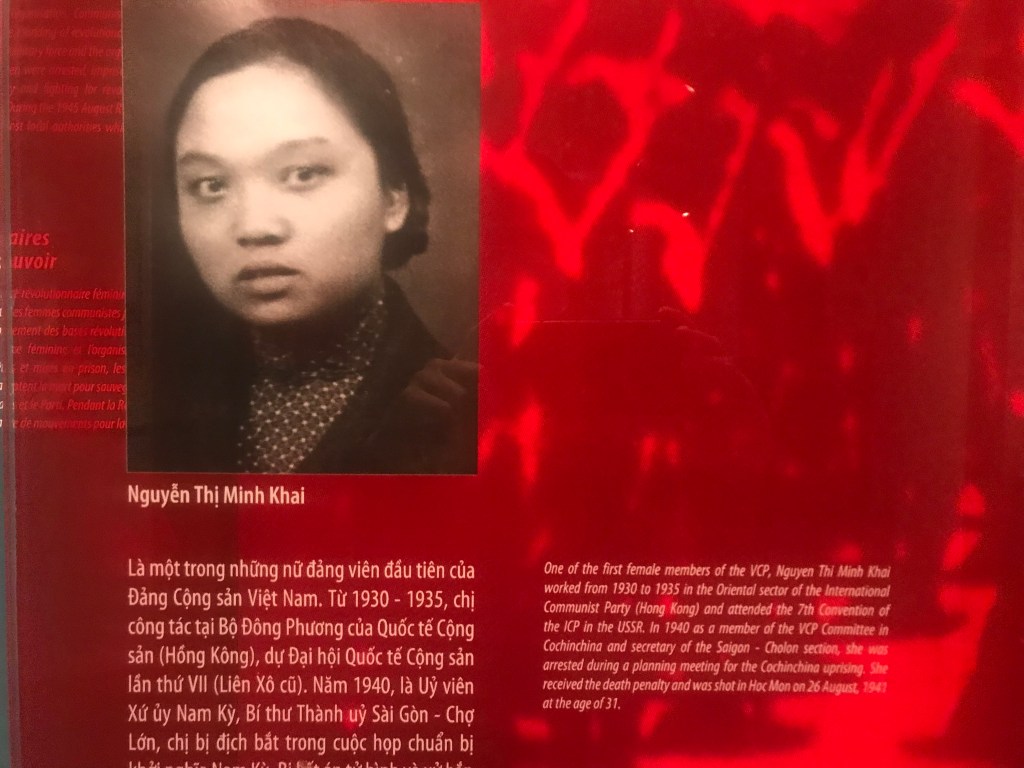
In 1927, at the age of 17, co-founded the New Revolutionary Party of Vietnam, a predecessor of the Communist Party. Assigned as a secretary to Hô Chí Minh in Hong Kong in 1930, she was imprisoned for three years for revolutionary activity. She returned to Vietnam in 1936 and became the top communist leader in Saigon. Arrested by the French in 1940, she was executed by firing squad the next year, together with fellow revolutionaries Võ Văn Tần and Nguyễn Văn Cừ.
Pasteur Institute
The few remaining French names on Vietnam streets owe their existence to the achievements of the Pasteur Institute. To manage hygiene and epidemics in southern Vietnam, it was established in Saigon in 1891 by immunologist Albert Calmette (1863-1933), famed for his snakebite antivenom and tuberculosis vaccine.
Another Pasteur physician was Alexandre Yersin (1863-1943), who co-discovered the bacillus responsible for the bubonic plague and proved that it could be transmitted from rodents to humans. He built a laboratory at Nha Trang to manufacture the vaccine and helped to establish the hill town of Da Lat (where a university bears his name) and the Ha Noi Medical University. He farmed both rubber and quinine trees imported from South America, the latter for their anti-malarial qualities. Throughout Vietnam, there are Pasteur, Calmette and Yersin streets in many locations, and Yersin’s house in Nha Trang is now a museum.

Phan Bội Châu
For 20 years in Japan and China, Châu (1867-1940) was an outspoken critic of French colonial rule, writing political tracts that called for the independence of Vietnam. In China he formed the Việt Nam Quang Phục Hội (“Vietnamese Restoration League”), modeled after Sun Yat-sen’s republican party. French agents arrested him in Shanghai in 1925 and convicted him of treason. He spent the rest of his life under house arrest in Huế.
Tôn Đức Thắng
As Hô Chí Minh’s successor, Thắng (1888-1980) was the last President of the Democratic Republic of Vietnam (1969-76) and the first President of the new Socialist Republic of Vietnam (1976-80).
Trần Hưng Đạo
Hưng Đạo (1231–1300) was an imperial prince and military commander during the Trần dynasty. He commanded the armies that in the late 13th century repelled two major Mongol invasions by the Yuan dynasty under Kublai Khan. These are considered among the greatest military feats in Vietnamese history. Today he is conferred god-like status at Taoist shrines.

Trần Phú
The first general secretary of the Indochinese Communist Party. Trần Phú (1904-31) studied in China and Moscow before returning to Vietnam in 1930. A year later, while editing Theses on the bourgeois revolution of civil rights, he was arrested by the French. He was executed five months later.
Võ Văn Kiệt
The prime minister of Vietnam from 1991 to 1997, Kiệt (1922–2008) is best remembered for his promotion of the nation’s Đổi mới (“innovation”) economic reforms of the 1980s and ‘90s. Designed to create a “socialist-oriented market economy,” they enabled private ownership of businesses and helped to accelerate Vietnam’s return to the world market after decades of war isolation.
Võ Thị Sáu
This teen-age rebel with a cause has a cult following in the Côn Đảo Islands. A guerrilla fighter, she was the first woman to be executed (by firing squad) at Côn Sơn Prison in 1952, age 19. Devotees shower her her grave on Côn Sơn Island with flowers to remember her as an ancestral spirit.

 Travels in Vietnam